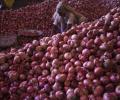
The move comes amid sharp increase in retail prices of onion since August despite the government's several measures to boost the supply and contain prise rise.
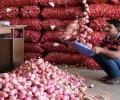
The government's subsidised onion sale initiative, launched on September 5, has led to price drops in major cities within days, the consumer affairs ministry said on Saturday. In Delhi, retail onion price fell from Rs 60 to Rs 55 per kg, while Mumbai saw a decrease from Rs 61 to Rs 56 per kg. In Chennai, the retail price reduced from Rs 65 to Rs 58 per kg, the ministry said in a statement.

The Union health ministry said the emerging scenario calls for immediate measures by states and UTs to ensure optimal availability of medical oxygen at all health facilities.

Cabinet note being readied, on basis of study, to ensure against foodgrain shortage; might require buffer of up to 50% more.
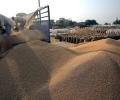
T Nanda Kumar, former food and agriculture secretary, shared his memories of working with former prime minister Manmohan Singh during some of India's most challenging times, highlighting Singh's compassionate leadership and commitment to ensuring food security for all Indians. Kumar recalled Singh's steadfast support during the 2008 global food crisis, where he championed a ban on non-basmati rice exports to secure domestic supplies. Singh's leadership, characterized by intellect and humility, left a lasting impression on Kumar, who considered him a mentor and guiding light.

Last fortnight, State Bank of India Chairman C S Setty lifted the veil on a subject long spoken of in corporate corridors: Why can't our banks finance mergers and acquisitions (M&As)? Change is in the air: Indian Banks' Association (of which Setty is the chairman) is to "make a formal request" to Mint Road to make way for it. Thus far the exclusive turf of foreign banks even though its funding remains offshore - as in, it's not on these entities rupee-book (and a few select shadow banks) - a most lucrative segment in the investment banking suite, M&As, will be homeward-bound.

Indian economy is in a sweet spot, with a mix of solid growth and moderating inflation, Moody's Ratings said, forecasting a 7.2 per cent GDP growth in the 2024 calendar year and 6.6 per cent in the next. In its Global Macro Outlook 2025-26, the rating agency said the global economy has shown remarkable resilience in bouncing back from supply chain disruptions during the pandemic, an energy and food crisis after the Russia-Ukraine war began, high inflation and consequent monetary policy tightening.

Days before Diwali, the monthly economic review by the finance ministry has highlighted moderation in urban demand, softening consumer sentiments and limited footfall as areas that need to be watched. In its review, released on Monday, the ministry also noted the early signs of artificial intelligence displacing workers, as described in anecdotal reports. The commentary from several large consumer goods companies, including Nestl India, Hindustan Unilever, and ITC, in their recent quarterly earnings, has been around a sluggish urban demand. Rural consumption, however, has mostly seen a revival, the companies pointed out.

'The Centre is planning to procure five million vials of Remdesivir ahead of the third wave. What's better is that this time, the government is paying us in advance,' said a senior executive of a Mumbai-based pharma player which makes Remdesivir. Sohini Das reports.

Foodgrain stocks held in government godowns amounted to 50.2 million tonnes at the start of the current month, according to the latest data from the Food Corporation of India.
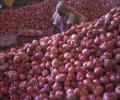
There was a delay in sowing of kharif onion because of late arrival of monsoon and later floods in many states damaged the crop.
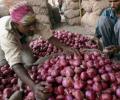
The government on Saturday imposed a minimum export price (MEP) of $800 per tonne on onion exports till December 31 this year with a view to increase availability of the vegetable in the domestic market and contain prices. The decision will come into effect from October 29. Besides, the government has also announced the procurement of additional 2 lakh tonnes of onion for the buffer, over and above the 5 lakh tonnes already procured.

Referring to the US sub-prime mortgage crisis and the likely slowdown of the global economy, Singh said, "this may impact both our exports as well as capital flows". Singh said with increased globalisation, the country's economy accounts for almost 40 per cent of the GDP and, hence, India cannot remain unaffected by global developments.

As a panel of senior ministers deliberates on the need to review curbs on exports of some rice varieties, data shows that since outbound shipments saw restrictions in July-August last year, the non-basmati segment has suffered more than basmati exports. Sources said the panel is expected to soon deliberate on a few suggestions to ease the export curbs on some rice varieties due to higher-than-required stocks in the central pool. The panel, some observers feel, may also postpone the decision to ease the export curbs till a firm picture emerges on the latest kharif paddy sowing.
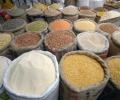
Procurement will be done through domestic purchases as well as imports.

The government on Friday scrapped a minimum price threshold that it had set previously for exports of onion as it looked to pass on the benefit of international glut to Indian farmers. The government had previously fixed a $550 per tonne as the minimum export price (MEP), which essentially meant farmers could not sell their produce overseas at lower than this rate.
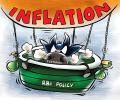
The Reserve Bank of India on Friday retained its projection for retail inflation at 4.5 per cent for the current fiscal assuming a normal monsoon, while emphasising that uncertainties related to food price outlook warrant a close monitoring. Consumer Price Index (CPI)-based retail inflation has been projected at 4.5 per cent with quarter-wise projections at 4.9 per cent in Q1 (April-June), 3.8 per cent in Q2, 4.6 per cent in Q3, and 4.5 per cent in Q4.

Retail inflation declined to a five-year low of 3.54 per cent in July mainly on account of subdued prices of food items, and base effect, according to official data released on Monday. The Consumer Price Index (CPI) based retail inflation was 5.08 per cent in June 2024 and 7.44 per cent in July 2023.

With intermittent disruptions in the supply chain of raw materials from China, the Indian pharma industry has braced itself with bigger inventory. Even smaller drug makers are now carrying a month of buffer stock of key raw materials, said industry insiders. The lockdown in various Chinese provinces, including Shanghai, is likely to delay shipments by two weeks to a month, said domestic players. Shipments are critical for the Indian drug industry, which imports 70 per cent of its raw material from China.
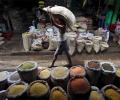
To prevent hoarding and check price rise, the Centre on Friday imposed stock limits on all pulses, except moong, held by wholesalers, retailers, importers and millers till October. The stock limits are imposed with immediate effect. An order in this regard has been issued by the Union food and consumer affairs ministry. Retail prices of pulses rose by more than 20 per cent during the January-June period of this year, according to the ministry's data.
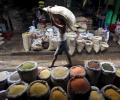
Food Minister Ram Vilas Paswan sought to shift the blame on states saying they are equally responsible for keeping the prices of essential commodities under control

The Reserve Bank of India's (RBI's) draft guidelines on gold loans, if implemented in their current form, are expected to impact non-banking financial companies (NBFCs) and mid-tier banks in the near term, more significantly than larger banks, according to analysts.

Closely watched by the world for any escalation, the Iran-Israel conflict is already showing early signs of stress for India Inc - longer deliveries, doubling freight rates, extended working capital cycles, and higher costs. For those yet to feel the heat, there is growing apprehension and nervousness over future developments, observed industry executives.

Reserve Bank on Thursday retained the growth and inflation projection at 7.2 per cent and 4.5 per cent respectively for the current fiscal amid expectations of a normal monsoon. In its last bi-monthly monetary policy review in June, RBI had projected real GDP growth and retail inflation at the same.

Barely days after imposing a 40 per cent export tax on onions to cool down soaring prices, which, in turn, triggered widespread protests across the main growing belts, the Centre on Tuesday sought to mitigate both political and economic tensions gripping parts of Maharashtra. It decided to procure an additional 200,000 tonnes of onions at Rs 2,410 per quintal for its buffer stock from farmers, a rate that is strikingly close to the price at which they were being exported before the 40 per cent duty was levied on August 19. The export price before the imposition of the duty stood at around $320 per tonne free on board (approximately Rs 2,650 per quintal).

The Supreme Court on Thursday said the country needs to be prepared for the third wave of COVID-19 which experts say could be more harmful, especially for children, and emphasised upon the need to create buffer stock of oxygen.

Here is some interesting information released by the government in response to questions posed by MPs in Parliament on Tuesday.
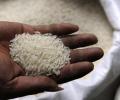
A 6-7 million tonnes shortfall in rice production due to a fall in paddy sowing area is likely to keep rice prices at elevated levels, adding to the inflationary pressure that the slowing economy is already grappling with. Elevated food prices, including that of cereals, had led to retail inflation reversing a three-month declining trend, to touch 7 per cent in August. Similarly, the wholesale price inflation, which declined to 11-month low, also showed price pressures from cereals resulting from wheat output being impacted by severe heat waves in some parts of the country.
The Indian government's decision to build 4 to 5 million tonnes of buffer stock of sugar has not gone well with the sugar industry.

Analysts remain selective on cement stocks amid the likely government's capex push ahead of the scheduled general elections in May 2024. While UBS has initiated coverage on the Indian cement sector with an anti-consensus negative view and suggests investors sell select cement stocks on a rally, those at Nomura remain selectively bullish on the sector and prefer companies with large brownfield optionality and multi-region presence. In the near-term, UBS expects strong earnings of cement companies in the next two quarters to be driven by robust demand and margin tailwinds, but suggests any sharp uptick in stock prices could offer a good opportunity for booking profits in the related counters.

Army Chief General Upendra Dwivedi Monday said there is still a 'degree' of standoff between the Indian and Chinese militaries along the Line of Actual Control in eastern Ladakh and both sides need to sit down and firm up a broader understanding on how to calm down the situation.

The Centre will utilise huge network of post offices across the country to sell subsidised pulses, mainly tur, urad and chana, to ensure availability in the ongoing festival season.

These decisions are aimed at helping mills in clearing part of over Rs 22,000-crore arrears to cane farmers.
He also said that genome sequencing for Omicron detection is underway for such passengers.

Outgoing SBI chairman Dinesh Kumar Khara on Saturday said the country's largest lender's net profits in the past four years under him have been higher than the cumulative figures for 64 years before that. However, Khara rued that the bank having a huge network of over 22,000 branches, and ammunition in terms of reserves and product suite, is not getting the "right value".

The committee would submit its report in the next two weeks.
The sources further said that the government has implemented a series of interventions in the past four months to provide relief to the sugarcane farmers and to ensure clearance of their dues.
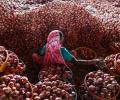
Traders say prices will remain elevated due to increased demand, lower availability

The Centre on Friday said it will sell 'Bharat Rice' in the retail market at Rs 29 per kg from next week to give relief to the common man and has also directed traders to disclose rice/paddy stock, as part of its efforts to control prices that have risen by around 15 per cent in the last one year. In a press conference, Union Food Secretary Sanjeev Chopra exuded confidence that these two measures along with the various restrictions of exports will help in cooling down the prices. Seeking to dispel market rumours, he categorically said the government has no plans to lift restrictions on rice exports any time soon.

Scenario is precarious for urad with almost half the crop damaged in major growing states, tur quota of 400,000 tonnes already exhausted.
